
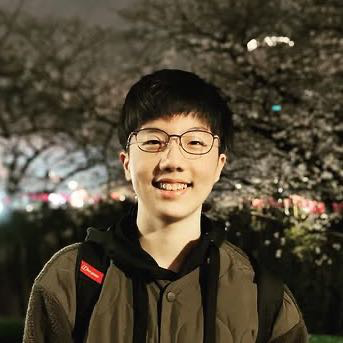
I remember staring at my IB portal in Tokyo waiting for that May 2023 result. Scoring a 45/45 felt surreal, but it gave me a clear view of how top universities actually weigh grades. Now I have offers from HKUST and HKU, along with one for HSPS at Cambridge.
Getting into HKUST requires more than high marks. You have to survive the stress of the Personal Statement while balancing internal assessments. I wrote this guide based on my actual application process to show you how to navigate their specific requirements effectively.
Academic Excellence: IB Scores and Beyond
First and foremost, academics are paramount. For IB students, HKUST typically looks for predicted scores in the high 30s to low 40s, often with specific requirements for Higher Level (HL) subjects relevant to your chosen program. For example, if you're applying for engineering, expect a strong emphasis on HL Math AA and Physics. My predicted score was 45, which certainly helped, but I also know friends who got in with scores in the 40-42 range.
It's not just about the final predicted score; consistency matters. HKUST will review your school transcripts, looking at your grades from Year 11 (Grade 10) and Year 12 (Grade 11). Demonstrate a clear upward trend or consistent high performance. If your school provides internal rankings or comments, ensure they reflect your dedication. For A-Level students, expect offers typically in the A*AA to AAA range, again with subject-specific requirements.
Choosing Your Program Wisely
HKUST offers a broad range of programs, and understanding their nuances is key. Some programs, like Global Business or Computer Science, are highly competitive. Others, such as certain science streams, might have slightly less intense competition but still demand strong academic profiles. Research the specific curriculum, career prospects, and faculty research interests for programs that genuinely align with your passions.
Consider applying to a program that plays to your strengths. For instance, if you excel in humanities but are applying to a highly quantitative program with weak supporting grades, it might raise questions. HKUST also offers 'broad-based' admissions, allowing you to choose your specific major later. This can be a good option if you're undecided but know your general area of interest (e.g., Engineering Undeclared).
Crafting a Compelling Personal Statement
Your personal statement is your chance to showcase who you are beyond your grades. HKUST, like many universities, wants to see genuine interest and passion. Don't just list your achievements; *reflect* on them. What did you learn from your Extended Essay, your CAS experiences, or your summer internship? How have these experiences shaped your academic interests and career aspirations?
For HKUST, I focused on my specific interest in sustainable engineering (my initial intended major). I discussed a research project I undertook in environmental science, linking it directly to HKUST's strong reputation in that field. Be specific. Mention particular professors whose work you admire, research centers that excite you, or unique aspects of HKUST's curriculum that appeal to you. Avoid generic statements about 'wanting to make a difference' without concrete examples.
Highlighting Extracurricular Activities and Leadership
While academics are primary, extracurriculars demonstrate your well-roundedness and soft skills. HKUST looks for students who contribute to their community and show leadership potential. Think quality over quantity. Being a founder of a club that actively ran projects is far more impactful than merely being a member of five different clubs.
In my application, I highlighted my role as the Head of my school's MUN delegation and my involvement in a local environmental advocacy group. I didn't just state these roles; I explained the challenges I faced, how I overcame them, and what I learned about teamwork, problem-solving, and communication. HKUST values students who can thrive in a dynamic, collaborative environment.
The Interview Process: Be Prepared and Authentic
Many competitive programs at HKUST require an interview. For international students, these are often conducted online. My interview for HKUST was with two professors from the engineering department. It lasted about 20 minutes and covered a mix of academic and personal questions. They asked about my interest in engineering, my favorite IB subjects, and how I would contribute to the HKUST community.
Be ready to discuss your personal statement in detail. They might pick out a specific experience you mentioned and ask you to elaborate. Also, expect some curveball questions to assess your critical thinking. One question I remember was, 'If you could invent anything to solve a global problem, what would it be and why?' The key is to think aloud, show your reasoning, and be authentic. Research the faculty and their work; mentioning it subtly can show genuine engagement.
Application Timeline and Strategy
HKUST typically has an early round application (often closing in November/December) and a main round (closing in January/February). Applying in the early round can be advantageous, as there might be more places available, and it demonstrates strong interest. I applied in the early round, submitting my application in late November.
Ensure all your documents are meticulously prepared: transcripts, predicted grades, personal statement, and recommendation letters. Give your teachers ample time to write strong letters. For IB students, your school counselor will typically submit your predicted grades and school profile directly. Double-check all deadlines and requirements specific to your curriculum.
Visa and Post-Offer Considerations
Once you receive an offer, the next step for international students is securing a student visa for Hong Kong. HKUST provides clear instructions and support for this process. It typically involves submitting various documents, including your offer letter, financial proof, and passport copies, to the Hong Kong Immigration Department. Start this process as soon as possible after accepting your offer, as it can take several weeks.
Beyond the visa, consider accommodation options. HKUST offers on-campus housing, which is highly recommended for first-year international students to ease the transition and immerse themselves in campus life. Research the different halls and their facilities. Hong Kong is a vibrant city, and HKUST's campus is beautiful, but being prepared for the practicalities will make your move much smoother.
Frequently asked questions
Getting into HKUST as an international student requires a strong academic foundation, a well-researched and authentic personal statement, meaningful extracurricular engagement, and solid interview preparation. Focus on demonstrating genuine passion for your chosen program and HKUST specifically, showcasing how your unique experiences and skills align with their values and academic rigor. Start early, be meticulous with your application, and highlight your contributions beyond just grades.