
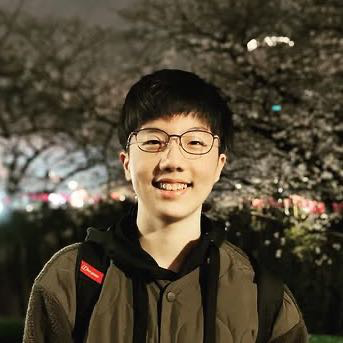
I know exactly how stressful the waiting game is. After scoring a 45/45 in my May 2023 IB session at my school in Tokyo, I spent weeks refreshing portals. Now I have offers from Cambridge HSPS, HKU, and HKUST. This guide shares the exact strategy I used to secure those admissions.
Most applicants struggle with the Personal Statement because they sound like a robot. You need a specific angle to stand out in the competitive Asia region. I will show you how to frame your extracurriculars. We will focus on the parts of the application that actually move the needle for admissions officers.
Academic Excellence: The Foundation
First and foremost, academics are non-negotiable for HKU. For IB students, the typical offer range for most competitive programs is 40-42 points, often requiring 6s or 7s in specific Higher Level subjects relevant to your chosen degree. For instance, if you're applying for an Engineering program, expect a high requirement in HL Maths and Physics. My predicted 45 was a significant factor, but it wasn't just the score; it was the breakdown. I scored 7s in HL Economics, History, and English Lit, which aligned perfectly with my humanities-focused applications.
Beyond the raw score, HKU looks at the rigor of your curriculum. Did you challenge yourself with difficult HL subjects? Did you take additional qualifications like an Extended Essay or Theory of Knowledge (TOK) exhibition that showcased independent research and critical thinking? These components are often overlooked but are crucial for demonstrating intellectual curiosity and academic maturity. Ensure your school reports reflect consistent high performance, not just a sudden spike in your final year.
Crafting Your Personal Statement: Beyond the Clichés
Your personal statement is where you differentiate yourself. HKU receives thousands of applications, and a generic essay about 'passion for learning' won't cut it. My strategy was to be specific and reflective. Instead of just stating I liked Economics, I discussed my Extended Essay on the impact of quantitative easing on Japanese SMEs, connecting it to specific economic theories I'd studied. I also referenced a debate competition where I argued for UBI, showing practical application of my interest.
Focus on 'show, don't tell.' Instead of saying you're a 'leader,' describe a specific instance where you led a project, the challenges you faced, and what you learned. Connect your extracurriculars directly to the skills required for your chosen HKU program. For example, my involvement in Model UN wasn't just a bullet point; I linked it to developing critical analysis and public speaking skills essential for my intended HSPS (and by extension, any social sciences) degree.
Extracurriculars: Quality Over Quantity
HKU values well-rounded individuals, but this doesn't mean having a laundry list of superficial activities. They want to see depth and genuine engagement. I focused on a few core activities where I held leadership roles or made significant contributions: President of the Debate Club, lead delegate in Model UN, and founding member of a student-led current affairs blog. These weren't just time-fillers; they were platforms where I developed tangible skills and demonstrated initiative.
Think about how your extracurriculars align with your personal growth and future aspirations. Did you volunteer for a cause you genuinely care about? Did you pursue a passion project independently? For example, I taught English to local elderly residents in Tokyo, which, while not directly academic, demonstrated empathy, communication skills, and a commitment to community. This kind of nuanced engagement resonates far more than simply being a 'member' of ten different clubs.
The Interview: Be Prepared, Be Authentic
Not all programs at HKU require an interview, but if yours does, treat it seriously. My interview for HKU's Bachelor of Social Sciences was conducted via Zoom. They asked about my academic interests, my motivations for choosing HKU, and current affairs relevant to my field. For instance, I was asked about the implications of the US-China trade war on global supply chains, which I connected back to economic theories and historical precedents.
Preparation is key. Research your chosen program thoroughly, understand its curriculum, and be ready to articulate why HKU specifically is the right fit for you. Practice discussing current events related to your field. Most importantly, be authentic. Don't try to give answers you think they want to hear. Show your genuine curiosity, critical thinking, and personality. My interviewers seemed genuinely interested in my perspective on global issues, not just my ability to recall facts.
Recommendation Letters: Choose Wisely
Your academic references play a crucial role. Choose teachers who know you well and can speak specifically about your academic abilities, character, and potential. It's not just about getting a letter from the Head of Department; it's about getting a *strong* letter. I asked my HL Economics teacher and my IB Coordinator, both of whom had seen my work ethic and contributions over several years.
Provide your recommenders with a 'brag sheet' or a summary of your achievements, specific projects, and the programs you're applying to. This helps them tailor their letter to highlight relevant qualities and examples. A generic letter, even from a senior teacher, is far less impactful than a specific, detailed one from a teacher who can genuinely advocate for you.
Application Timeline and Strategy
HKU's application portal (online application system) typically opens in September for the following academic year, with early bird deadlines often in November and main deadlines in December/January. Applying early can sometimes be advantageous, especially for competitive programs, as it allows your application to be reviewed sooner. I submitted my application in early November.
Pay meticulous attention to detail when filling out the application form. Double-check all your academic records, test scores (e.g., IB transcripts, SAT/ACT if applicable), and personal information. Any discrepancies or errors can cause delays. Ensure all supporting documents, including your personal statement and recommendation letters, are submitted by the deadlines.
Demonstrating Fit for Hong Kong
Beyond academics and extracurriculars, HKU wants to see that you've thought about why you want to study in Hong Kong specifically. In my personal statement and interview, I highlighted Hong Kong's unique position as a global financial hub and a bridge between East and West, and how this environment would enrich my studies in social sciences. I also mentioned my interest in its vibrant culture and diverse student body.
Show genuine interest in the city and its opportunities. Have you researched specific professors or research centers at HKU that align with your interests? Do you understand the career prospects that HKU and Hong Kong offer? This demonstrates maturity and a clear vision for your future, indicating you're not just applying randomly but have a well-considered plan.
Frequently asked questions
Getting into HKU as an international student demands a strategic approach centered on academic excellence, a compelling personal statement, and meaningful extracurricular engagement. Focus on demonstrating genuine intellectual curiosity, critical thinking, and a clear understanding of why HKU and Hong Kong are the right fit for your aspirations. My journey, from an international school in Tokyo to offers from HKU, HKUST, and Cambridge, underscores the importance of a well-rounded, authentic application that tells your unique story and showcases your potential.