
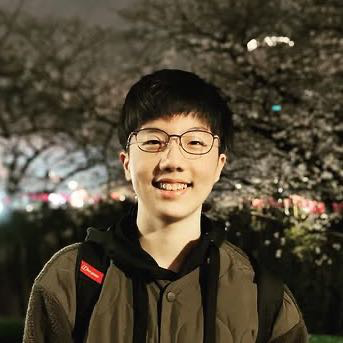
I finished my IB in Tokyo during the May 2023 session with a 45. Now I am deciding between my Cambridge HSPS offer and options from HKU and HKUST. Physics was my toughest battle. I spent months fighting through those confusing Paper 1 multiple choice questions that seem to trick you on purpose.
Finding the right study materials changes everything. I curated this list based on what actually worked for me during late-night revision sessions. These tools helped me master the syllabus and secure a 7. You can stop guessing which guides are useful and start focusing on the high-yield topics.
Textbooks: Beyond the Classroom Core
While your school likely uses a primary textbook (ours used the Oxford course companion), relying solely on one resource can leave gaps. For conceptual clarity, I found the **Tsokos Physics for the IB Diploma** to be exceptionally good. Its explanations are thorough, and the worked examples often present problems in a slightly different light, which helps solidify understanding.
Another invaluable resource, especially for HL students, is the **Cambridge Physics Coursebook by David Sang**. This book excels in its problem sets. The questions are often more challenging and nuanced than those found in the Oxford companion, pushing you to apply concepts rather than just recall them. I'd use this for extra practice after covering a topic in class.
Online Resources: Targeted Practice and Explanations
For specific topics I struggled with, YouTube channels were a lifesaver. **Chris Doner's Physics Solutions** is excellent for step-by-step problem-solving and conceptual breakdowns. He covers nearly every topic on the syllabus, and his explanations are clear and concise. I'd often watch his videos before attempting difficult past paper questions.
Another highly recommended resource is **Exam-Mate.com**. While it's a paid subscription, the ability to filter past paper questions by topic and sub-topic is incredibly powerful. This allowed me to focus my revision on areas where I knew I was weak, rather than sifting through entire papers. For example, if I struggled with 'Simple Harmonic Motion', I could pull up all SHM questions from the last 10 years immediately.
The Crucial Role of the Data Booklet
This might seem obvious, but many students underestimate the data booklet. You need to know it inside out. Don't just glance at it; understand where every formula is, what each symbol means, and which constants are provided. During exams, precious time is lost if you're hunting for a formula you should already be familiar with.
Practice using the data booklet during your revision. When doing past papers, always have it open. Highlight key formulas, make notes on common pitfalls (e.g., remembering to convert units), and understand the relationship between different formulas. This proactive approach will make you much faster and more confident during the actual exam.
Past Papers: Your #1 Study Tool
Past papers are the gold standard for IB Physics revision. Start doing full papers **at least four months before your exams**. Don't wait until the last minute. Begin by doing them topic-by-topic using resources like Exam-Mate, then transition to full papers under timed conditions.
For the final two months, I aimed to complete at least two full papers (Paper 1, 2, and 3) per week. This allowed me to identify recurring question types, understand the mark scheme's expectations, and build stamina. Crucially, always use the official mark schemes to grade your work, not just to check answers, but to understand *why* points are awarded or deducted. Pay close attention to command terms like 'explain,' 'state,' 'derive,' and 'calculate'.
Paper 1 (Multiple Choice): Strategy is Key
Paper 1 often feels like a race against time. The best way to improve here is by doing an enormous volume of past Paper 1s. Don't just do them; analyze your mistakes. Was it a conceptual misunderstanding, a calculation error, or misinterpreting the question?
I found it helpful to review the explanations for incorrect answers, even if I guessed correctly. Sometimes, the distractors in Paper 1 are very cleverly designed. Understanding why the wrong options are wrong can solidify your understanding and prevent similar errors in the future. Aim for near perfection in Paper 1, as those 'easy' marks are crucial for a 7.
Paper 2 & 3 (Free Response): Mastering Mark Schemes
These papers are where you demonstrate your deeper understanding and problem-solving skills. For Paper 2, focus on clear, logical steps in your derivations and calculations. Always show your working. For explanation questions, use precise scientific language and link directly to the concepts being tested. Don't waffle.
Paper 3 (Options) requires dedicated study of your chosen option. Treat it like a separate mini-syllabus. For my option (Astrophysics), I went through every past paper question available, ensuring I could confidently answer both the data-based questions and the longer explanation/derivation questions. The key here is specificity – the mark schemes are very particular about the exact terminology and steps required.
Mock Exams: Simulating the Real Deal
Treat your school's mock exams as serious practice. Replicate exam conditions as closely as possible: no distractions, strict timing, and only allowed materials. This builds mental endurance and helps you identify areas where you struggle under pressure. My mocks were particularly useful for adjusting my pacing for Papers 1 and 2.
After the mocks, get detailed feedback from your teacher. Don't just look at your score; understand *why* you lost marks. Was it careless error, a knowledge gap, or poor exam technique? Use this feedback to refine your study plan for the final sprint.
Frequently asked questions
Achieving a 7 in IB Physics HL requires a strategic combination of solid conceptual understanding, targeted online resources, and relentless past paper practice. My personal experience, aiming for top universities, showed that using specific textbooks like Tsokos and Sang, leveraging tools like Exam-Mate, and meticulously analyzing mark schemes were key. Don't just study; study smart, focusing on exam technique and familiarizing yourself completely with the data booklet and question patterns from the last decade of exams.