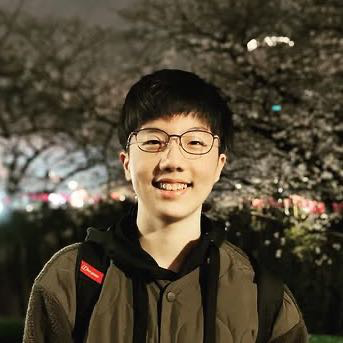
I hit a perfect 45 in my May 2023 session while studying at an international school in Tokyo. Now I have offers from Cambridge HSPS, HKU, and HKUST. I know exactly how frustrating it is to hunt for the elusive 2016-2019 question banks when your internal deadline looms.
Finding high-quality study materials changes your grade. This guide lists the tools I used to master the syllabus. You will find a curated selection of IB Biology resources past papers and active recall methods that actually work for the current marking schemes.
The Unsung Heroes: Textbooks & Study Guides
While your school likely provides a core textbook, don't limit yourself. For IB Biology, I found a combination approach most effective. The Oxford course companion is generally excellent for breadth and depth, often providing good examples and diagrams. However, for certain topics, I found myself needing a different perspective or more detailed explanations.
Specifically, for HL topics like genetics, evolution, and human physiology (especially the nervous and immune systems), I often cross-referenced with the Pearson Baccalaureate Biology Higher Level textbook. It sometimes presented information in a way that clicked better for me, or offered alternative examples that solidified my understanding. Don't feel obligated to read every page of multiple books, but use them as reference tools when you're stuck on a concept. For quick summaries and practice questions, the Hodder Education 'Biology for the IB Diploma' study and revision guide was invaluable in the final months.
Online Platforms & Digital Resources That Deliver
In the digital age, relying solely on physical textbooks is inefficient. My go-to online resource was BioNinja. This website is a goldmine for IB Biology students. It breaks down every syllabus point with clear explanations, diagrams, and even links to relevant videos. It's meticulously organized by topic and subtopic, making it incredibly easy to navigate and find exactly what you need. I used BioNinja for initial learning, revision, and quick checks on specific concepts.
Another fantastic resource, particularly for visual learners, is Alex Lee's YouTube channel. His videos on complex processes like cellular respiration and photosynthesis are exceptionally clear and well-animated. They helped me grasp the overall flow and interconnectedness of these pathways, which can be challenging to visualize from text alone. For specific practicals and experimental design, I also found some useful demonstrations on YouTube from various educators, though these were less consistent in quality compared to BioNinja or Alex Lee.
Mastering Practical Skills & IA (Internal Assessment)
The Internal Assessment (IA) is 20% of your final grade, so don't underestimate its importance. My school provided excellent guidance, but for additional inspiration and understanding of criteria, I looked at exemplar IAs (anonymized, of course) provided by my teachers. Understanding what a 'good' IA looks like in terms of personal engagement, exploration, analysis, evaluation, and communication is crucial.
For practical skills in general, it's about active participation in labs and understanding the 'why' behind each step. Don't just follow instructions; question the purpose of controls, the limitations of apparatus, and potential sources of error. This critical thinking is what distinguishes a top-scoring student, not just in the IA but also in Paper 3's data analysis and experimental design questions.
The Core of Success: Past Papers Strategy
This is where the rubber meets the road. Simply 'doing' past papers isn't enough; you need a strategic approach. I started incorporating past paper questions into my revision from the end of Year 12, focusing on specific topics as we completed them. For example, after finishing the Cell Biology unit, I'd do all relevant Paper 1 (multiple choice) and Paper 2 (short answer/essay) questions from the last 5-7 years.
As the final exams approached, I shifted to full papers under timed conditions. Crucially, I didn't just mark them; I meticulously analyzed my mistakes. Why did I get that multiple-choice question wrong? Was it a misunderstanding of the concept, a misinterpretation of the question, or a careless error? For Paper 2, I compared my answers to the mark scheme, identifying keywords and depth of explanation required. I kept an 'error log' for recurring mistakes or weak topics, which then guided my further revision.
Specific Past Paper Focus: Paper 1, 2, & 3
Paper 1 (Multiple Choice): These questions often test your understanding of definitions, diagrams, and basic processes. They can be deceptively tricky. Practice identifying distractors and understanding why certain options are incorrect. Don't just guess; try to eliminate wrong answers systematically. I found that doing a large volume of Paper 1 questions helped me recognize common question patterns and identify areas where my foundational knowledge was weak.
Paper 2 (Short Answer & Essay): This is where detailed knowledge and the ability to articulate scientific concepts come into play. Pay close attention to command terms (e.g., 'describe,' 'explain,' 'compare,' 'evaluate'). Each command term requires a different type of response. For essay questions, practice structuring your answers logically, using relevant biological terminology, and providing specific examples where appropriate. I often outlined essay answers before writing them fully to ensure I hit all the key points.
Paper 3 (Options & Data Analysis): This paper is often overlooked until too late. Your chosen option (e.g., Human Physiology, Biotechnology) needs thorough revision, as the questions can be very specific. For the data analysis section, practice interpreting graphs, tables, and experimental setups. Understand concepts like standard deviation, correlation vs. causation, and limitations of experimental design. This section heavily relies on critical thinking and applying your biological knowledge to unfamiliar scenarios.
Exam Timeline & Revision Strategy
My revision kicked into high gear around six months before the May exams. Initially, it was about consolidating notes and revisiting challenging topics using BioNinja and textbooks. By January/February, I was integrating topic-specific past paper questions. The final two months were dedicated to full past papers under timed conditions, alternating between Paper 1, 2, and 3.
I aimed to complete all available past papers from the last 7-10 years (from the official IB question bank) at least once, with a focus on the most recent ones. Don't forget to practice drawing diagrams accurately and labeling them correctly, as these often appear in Paper 2 and are easy marks if you're prepared. Consistent, spaced revision is far more effective than last-minute cramming.
My Personal Take: Beyond the Syllabus
While achieving a high grade is the primary goal, try to foster genuine curiosity. IB Biology is fascinating, covering everything from the microscopic world of cells to the complexities of ecosystems and human health. Understanding these concepts not only helps with exams but also provides a deeper appreciation for the world around us.
For those applying to competitive universities like Cambridge, HKU, or HKUST, strong IB scores are crucial. But beyond the numbers, demonstrating a genuine interest in your chosen field (whether it's medicine, biomedical science, or something else entirely) through your personal statement and interviews can make a difference. The knowledge and critical thinking skills you develop in IB Biology are invaluable, regardless of your future path.
Frequently asked questions
Excelling in IB Biology requires a strategic blend of resources, consistent practice, and a deep understanding of the syllabus. Utilize comprehensive online platforms like BioNinja, supplement with textbooks for depth, and rigorously engage with past papers, analyzing your mistakes to refine your knowledge and exam technique. This focused approach, combined with genuine curiosity, will not only secure a top grade but also equip you with invaluable skills for university and beyond.