
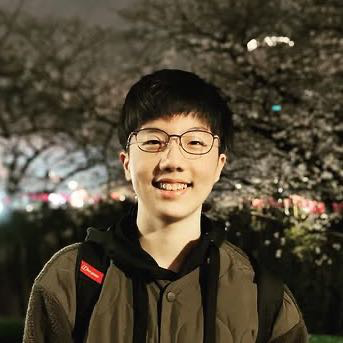
I know exactly how it feels to stare at a subjunctive conjugation and feel completely lost. I hit my stride after scoring 45/45 in the May 2023 IB session while studying at an international school in Tokyo. Now, I am holding a Cambridge HSPS offer alongside offers from HKU and HKUST.
Getting top marks requires more than basic vocabulary. You need a strategy for the dreaded listening exam where one missed word ruins a whole section. I wrote this guide to show you how to bridge the gap between being conversational and hitting that A* grade through targeted practice.
Mastering the Core Vocabulary and Grammar (Beyond the Textbook)
The textbook vocabulary lists are a starting point, not the destination. For an A*, you need to expand your lexicon significantly beyond the basics. I created my own Anki decks for higher-level vocabulary related to common A-Level themes: environment, society, technology, politics, and art. Instead of just individual words, I focused on collocations and idiomatic expressions. For example, instead of just 'problema,' I learned 'un problema acuciante' (a pressing problem) or 'abordar un problema' (to tackle a problem). This makes your writing and speaking sound far more natural and sophisticated.
Grammar is non-negotiable. While you might get by with minor errors at lower levels, an A* demands near-perfect accuracy, especially in complex structures. I spent dedicated time on subjunctive mood nuances (e.g., 'es importante que + subjunctive' vs. 'es cierto que + indicative'), conditional clauses, and correct pronoun placement. Don't just understand the rules; internalize them through targeted practice exercises from advanced grammar workbooks (e.g., 'Gramática de uso del español' B2-C1 levels) and by actively correcting your own mistakes in written work.
The Speaking Exam: From Hesitant to Eloquent
The speaking exam is often where students lose easy marks. My strategy involved two key pillars: structured preparation and genuine engagement. For the individual research project (or similar extended discussion), I chose a topic I was genuinely passionate about – 'El impacto de la globalización en la identidad cultural de los jóvenes en España y Japón.' This allowed me to speak with conviction and depth, rather than just reciting facts. I prepared bullet points, not full scripts, to ensure natural delivery.
Beyond the prepared topic, the general conversation requires spontaneity. I regularly practiced discussing current events, ethical dilemmas, and abstract concepts in Spanish with my teacher and a native tutor. We'd role-play interview scenarios, focusing on expanding answers, using discourse markers ('sin embargo,' 'por consiguiente,' 'además'), and justifying opinions. Record yourself and listen back; you'll be surprised at the fillers or repetitive phrases you use that can be replaced with more sophisticated alternatives.
Conquering the Listening Comprehension
A-Level listening often features authentic materials, not just simplified dialogues. To prepare, I immersed myself in Spanish-language media. My go-to resources were Spanish podcasts like 'Radio Ambulante' (Latin American stories), 'Hoy Hablamos' (daily Spanish news and culture), and 'El Gran Apagón' (a fictional thriller podcast). Start with transcripts if needed, then gradually move to listening without them. The key is to expose yourself to different accents, speeds, and registers.
During practice exams, I developed a specific strategy: read the questions thoroughly before the audio starts, highlighting keywords. When listening, don't panic if you miss a word or phrase; focus on the overall gist and the information directly relevant to the questions. For the second listen, target the specific gaps or areas of uncertainty. Remember, it's not about transcribing every word, but extracting the required information accurately.
Acing the Reading Comprehension and Translation
Reading comprehension requires more than just understanding the main idea; it demands inferencing, identifying specific details, and understanding authorial intent. I regularly read articles from Spanish newspapers (e.g., El País, La Vanguardia) and magazines (e.g., Muy Interesante) on a variety of topics. This not only expanded my vocabulary but also familiarized me with different writing styles and argument structures.
For translation, both into and out of Spanish, precision is paramount. When translating into Spanish, aim for natural-sounding language, not a literal word-for-word rendition. Understand the nuance of the English phrase and find its Spanish equivalent. For example, 'he managed to escape' is better translated as 'logró escapar' than 'él manejó a escapar.' When translating from Spanish, pay close attention to verb tenses, subtle adjective meanings, and idiomatic expressions that don't directly translate.
Crafting High-Scoring Essays: Structure and Sophistication
The essay component is where you demonstrate your ability to construct a coherent, well-supported argument in sophisticated Spanish. My approach involved meticulous planning. Before writing, I'd brainstorm arguments for both sides of the prompt, select the strongest points, and outline a clear thesis statement and paragraph structure (introduction, 2-3 body paragraphs with topic sentences and evidence, conclusion). This ensures logical flow and prevents rambling.
In terms of language, I focused on using a range of complex grammatical structures (e.g., relative clauses, passive voice, conditional sentences) and a rich, varied vocabulary, including advanced connectives and expressions of opinion. Avoid repetitive phrasing. After writing, I'd self-correct for grammatical errors, awkward phrasing, and ensure my arguments were fully developed. Getting feedback from my teacher on these essays was invaluable for identifying blind spots.
Leveraging Cultural Immersion (Even from Tokyo)
As an international student in Tokyo, direct immersion in a Spanish-speaking country wasn't always feasible. However, I created my own 'mini-immersion' environment. I watched Spanish films and TV series (e.g., 'La Casa de Papel,' 'Élite,' 'Narcos' with Spanish audio) with Spanish subtitles, gradually moving to no subtitles. I listened to Spanish music and followed Spanish-speaking influencers or news outlets on social media. This constant exposure kept the language alive and relevant.
Beyond entertainment, I actively sought out opportunities to use Spanish. My school had a Spanish club, and I volunteered to tutor younger students in Spanish. If possible, find a language exchange partner online (e.g., via apps like Tandem or HelloTalk) to practice conversational Spanish with native speakers. These interactions build confidence and expose you to real-world language use, which is invaluable for exam performance.
Exam Day Strategy and Mental Preparation
On exam day, time management is critical. During practice, I timed myself rigorously for each section to understand my pace and identify areas where I tended to linger. In the actual exam, I'd quickly skim the entire paper to gauge the length and difficulty, then allocate my time accordingly. Don't get stuck on one difficult question; move on and come back to it if time permits.
Mental preparation is just as important as academic preparation. I made sure to get adequate sleep, eat a good breakfast, and arrive at the exam venue early. Staying calm and focused allows you to access all the knowledge you've accumulated. Trust your preparation, read instructions carefully, and double-check your work where possible. An A* isn't just about knowing the answers; it's about presenting them perfectly under pressure.
Frequently asked questions
Achieving an A* in A-Level Spanish is a multi-faceted endeavor that goes beyond classroom learning. It demands a proactive approach to vocabulary and grammar acquisition, strategic preparation for each exam component, consistent immersion in authentic Spanish media, and a disciplined mindset. By adopting these concrete strategies, you can transform your Spanish skills and secure the top grade needed for competitive university applications, just as I did for Cambridge, HKU, and HKUST.